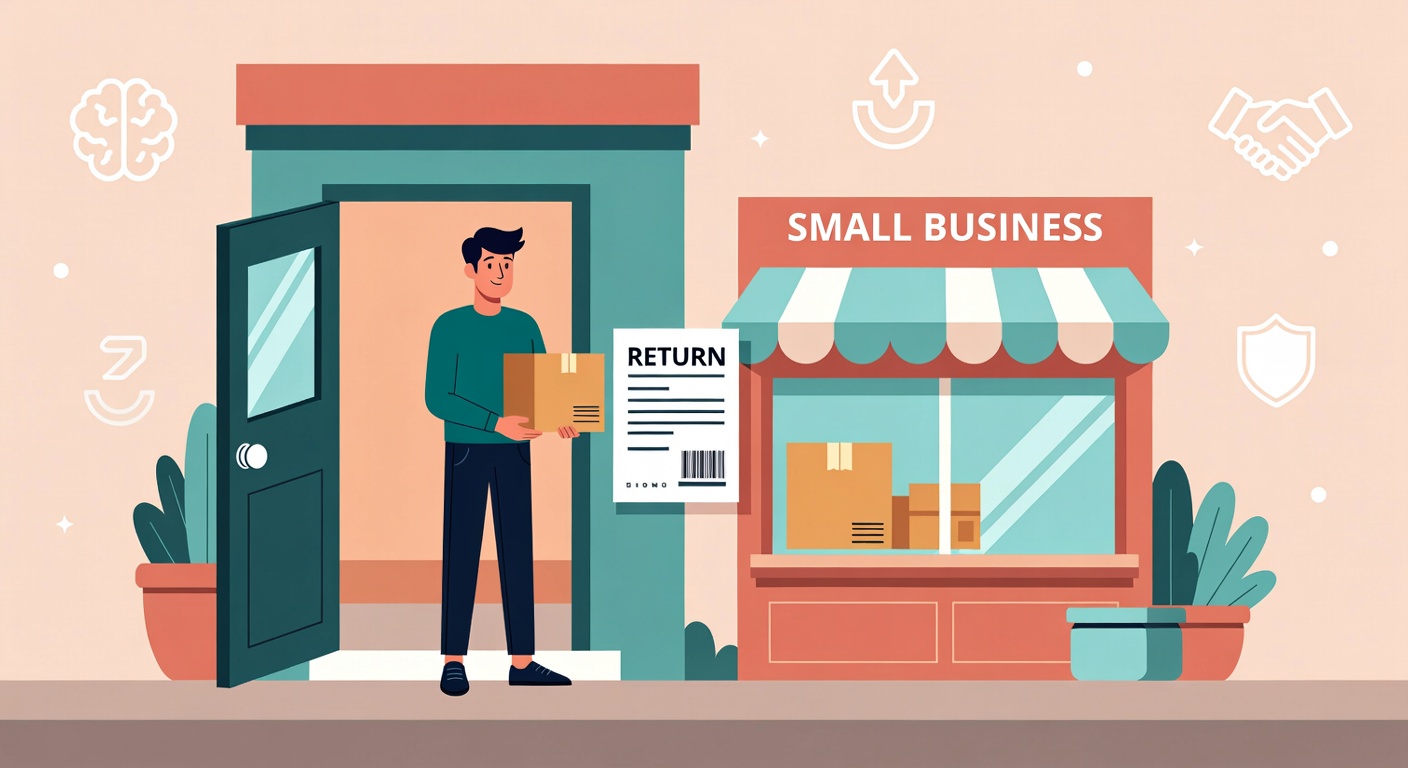
The Most Counterintuitive Sales Strategy You’re Probably Ignoring
What if I told you that making it easier for customers to return products would actually result in fewer returns and more sales? It sounds like bad business advice, but decades of consumer psychology research says otherwise.
For most small business owners, returns feel like a cost center—a necessary evil that eats into margins and creates logistical headaches. But the smartest retailers have discovered something powerful: your return policy isn’t just a safety net for customers. It’s one of your most effective sales tools.
Let’s dive into the psychology behind why this works.
The Paradox of Easy Returns
Here’s the uncomfortable truth: strict return policies don’t actually prevent returns. They prevent sales.
The Cart Abandonment Problem
Studies consistently show that unclear or restrictive return policies are a leading cause of cart abandonment:
- 67% of shoppers check the return policy before making a purchase
- 80% of consumers say a hassle-free return policy makes them more likely to buy
- 58% of shoppers want a “no questions asked” return experience
- Complicated return processes cause 30% of potential customers to abandon their carts
When a customer hesitates at checkout, they’re doing a quick mental calculation: “What happens if this doesn’t work out?” If your return policy creates uncertainty, they’ll often decide the risk isn’t worth it—and buy from someone else.
The Safety Net Effect
Easy return policies work like insurance. Just knowing the option exists reduces anxiety and removes the psychological barrier to purchase. It’s the same reason people feel safer driving a car with airbags, even if they never expect to need them.
This “safety net” effect is particularly powerful for:
- First-time customers who don’t yet trust your brand
- Higher-priced items where the financial risk feels significant
- Products that are difficult to evaluate online (clothing, furniture, electronics)
- Gift purchases where the buyer isn’t sure of the recipient’s preferences
Loss Aversion and the Endowment Effect
Two well-documented psychological principles explain why generous return policies rarely backfire.
We Hate Losing More Than We Love Gaining
Loss aversion is a cornerstone of behavioral economics. Research by psychologists Daniel Kahneman and Amos Tversky showed that the pain of losing something is psychologically about twice as powerful as the pleasure of gaining something equivalent.
What does this mean for returns? Once customers have a product in their hands, returning it feels like a loss—even if they’re getting their money back. The item has become “theirs,” and giving it up triggers the same discomfort as losing something they already owned.
The Endowment Effect in Action
Related to loss aversion is the endowment effect: we value things more simply because we own them. Studies have shown that people consistently value objects they possess higher than identical objects they don’t own.
This is why the typical return rate across e-commerce is only around 10-15%, despite most items being technically returnable. Once that package arrives and the customer unboxes it, something psychological shifts. The item stops being “a product” and becomes “my product.”
The 30-Day Sweet Spot
There’s a reason 30-day return windows have become industry standard—they’re long enough to feel generous but short enough to create a sense of ownership.
Here’s the clever psychology at play:
- Days 1-7: Customer is excited about their purchase (honeymoon phase)
- Days 8-21: Product integrates into daily life; routines form
- Days 22-30: Returning now feels like disrupting an established pattern
By the time the return window is closing, many customers have developed an emotional attachment to the product. The effort of packaging it up, printing a label, and dropping it off feels like more trouble than it’s worth—especially compared to an item that’s now woven into their life.
Trust Signals: What Your Policy Really Communicates
Your return policy says more about your business than you might realize. Customers read between the lines.
The Subconscious Message of “No Returns”
When a business has a strict no-returns policy (or one buried in fine print), customers unconsciously ask: “What are they hiding?” A restrictive policy signals:
- Potential quality issues with the product
- A company that prioritizes its convenience over customer satisfaction
- A lack of confidence in what they’re selling
- A transactional rather than relationship-focused business
Even if your products are excellent, a restrictive policy plants seeds of doubt.
The Confidence Signal
Conversely, a generous return policy communicates:
- “We stand behind our products”
- “We trust you as a customer”
- “Your satisfaction matters more than this individual transaction”
- “We’re confident you’ll love what you buy”
This confidence is contagious. When you show faith in your products, customers are more likely to share that faith.
The Amazon Effect
Like it or not, Amazon has reset consumer expectations. Their hassle-free returns have become the baseline that customers use to judge everyone else.
When your small business competes with a return policy that feels restrictive by comparison, you’re fighting an uphill battle. Customers who might prefer to support small businesses will often default to the “safer” option of a retailer with easy returns.
The good news? You don’t need Amazon’s resources to offer Amazon-level return experiences. You just need smart policies and the right tools.
The Return Experience as a Brand Moment
Here’s what separates good businesses from great ones: understanding that a return isn’t a failure—it’s an opportunity.
Returns Build Loyalty
A smooth return experience does something powerful: it proves your customer service isn’t just talk. Anyone can be pleasant when things go right. How you handle problems is what customers remember.
Research backs this up:
- 95% of customers who have a good return experience will buy from that retailer again
- 82% of shoppers are more likely to complete a purchase if they can return items in-store
- A positive return experience increases customer lifetime value by 25-40%
The Cost of a Bad Return Experience
On the flip side, a frustrating return process is often the last interaction a customer will ever have with your brand:
- 84% of consumers say they won’t return to a retailer after a negative return experience
- 30% of shoppers who have a bad return experience will actively discourage others from shopping there
- Negative return experiences generate 3x more social media posts than positive ones
The math is clear: the short-term cost of making returns easy is almost always less than the long-term cost of losing customers.
Turning Returns Into Reviews
Some brands have mastered the art of turning returns into marketing opportunities:
- Follow-up emails thanking customers for trying the product and inviting feedback
- Easy exchanges that keep the customer in your ecosystem rather than refunding entirely
- Return surveys that gather valuable product improvement data
- Surprise gestures like discount codes for future purchases
A customer who returns a product but has a great experience may become a more loyal advocate than one who never had a problem at all.
Practical Takeaways for Small Businesses
Understanding the psychology is one thing. Implementing it is another. Here’s how to apply these principles:
Write Policy Language That Converts
Your return policy should be:
- Easy to find (not buried in footer links)
- Written in plain language (no legal jargon)
- Specific about the process (what to do, how long it takes)
- Reassuring in tone (this is customer service, not a legal document)
Instead of: “Returns accepted within 30 days with original receipt and packaging. Restocking fees may apply.”
Try: “Not in love with your purchase? No problem. Return anything within 30 days for a full refund—no questions asked. We’ll even email you a prepaid shipping label.”
Invest in Prepaid Return Labels
Nothing says “we trust you” like including a prepaid return label or making one instantly available. Yes, it costs money. But consider it an investment in:
- Higher conversion rates (customers buy with less hesitation)
- Positive word-of-mouth (easy returns get talked about)
- Reduced customer service burden (fewer angry emails and calls)
- Data collection (you learn what’s not working)
With tools like I’d Ship That, generating return labels is simple and cost-effective for businesses of any size.
Know When Stricter Policies Make Sense
Not every product category benefits from ultra-lenient returns. Consider more protective policies for:
- Custom or personalized items (can’t be resold)
- Perishable goods (food, flowers)
- Hygiene products (cosmetics, underwear)
- Final sale/clearance items (clearly marked as non-returnable)
- Digital products (downloadable content)
The key is clarity. Customers accept stricter policies when they understand the reason and know before purchasing.
Test Your Return Policy Knowledge
Think you’ve got a handle on return policy psychology? Put your knowledge to the test:
Return Policy Psychology Quiz 🎯
How well do you understand the psychology behind effective return policies?
Conclusion: Returns Are a Feature, Not a Bug
The most successful e-commerce businesses don’t view returns as a problem to minimize—they see them as a trust-building feature that ultimately drives more sales.
The psychology is clear:
- Easy returns reduce purchase anxiety and increase conversion
- Loss aversion and the endowment effect mean most returnable items never get returned
- Your policy signals your confidence in what you’re selling
- Great return experiences build loyalty that far outweighs the cost
The next time you’re tempted to tighten your return policy to “prevent losses,” remember: you might be preventing sales instead.
Ready to make returns effortless for your customers? I’d Ship That makes it easy to generate return labels, track shipments, and create the kind of shipping experience that builds customer loyalty.
Make Returns Easy with I'd Ship ThatWant to learn more about shipping psychology? Check out our articles on the psychology of package tracking and why we get excited about packages.